





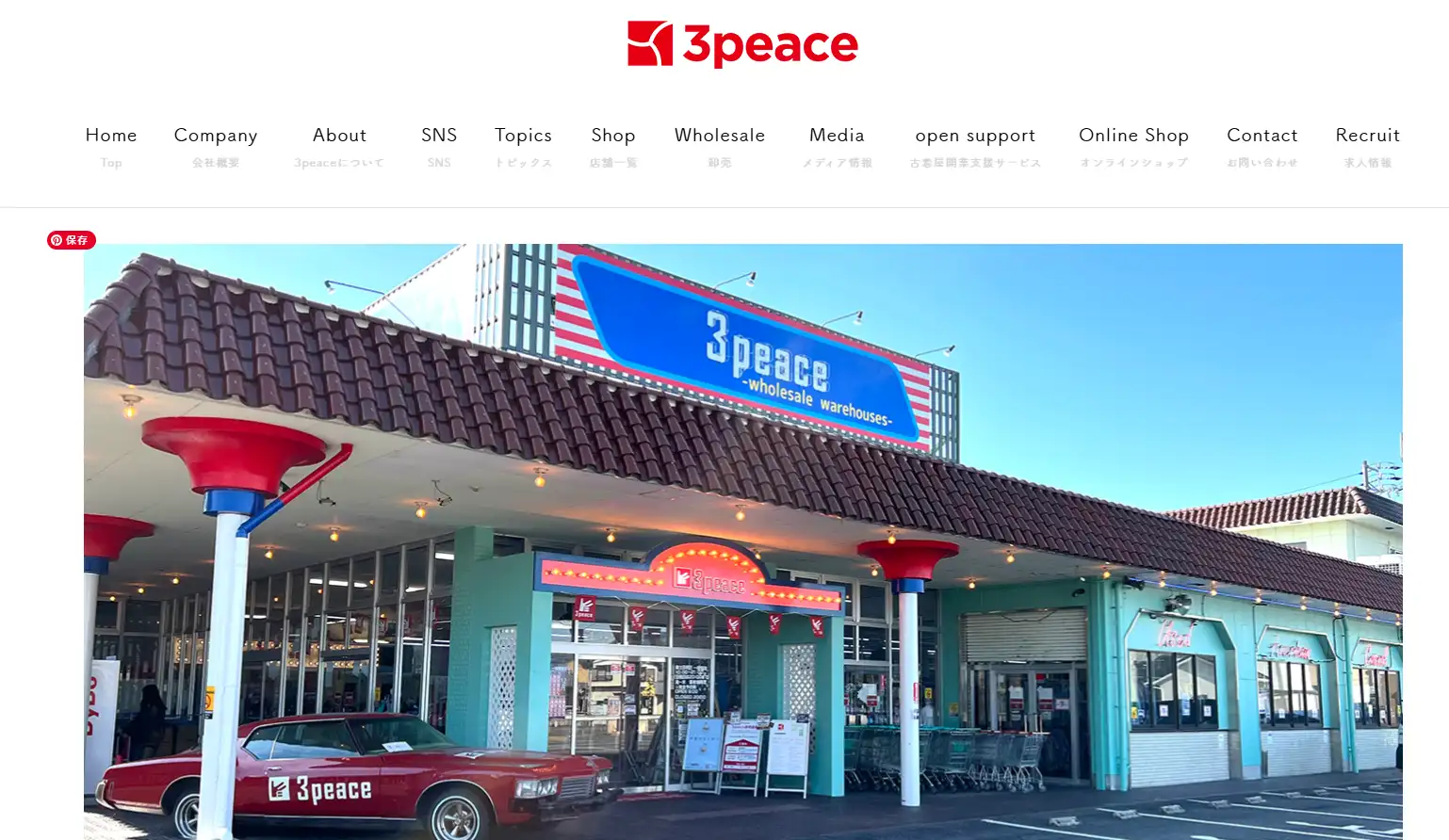
Strategic Analysis of 3peace.shop: A Comprehensive Market Report
(Updated with 5 Verified External Data Sources)
Executive Summary
3peace.shop operates as a vertically integrated platform within Japan’s rapidly expanding secondhand fashion ecosystem, combining wholesale distribution, retail franchising, and comprehensive retail support services. The company’s hybrid business model positions it uniquely to capture value across multiple segments of the circular fashion economy. With direct import capabilities of over 100,000 used garments weekly from the United States and a warehouse footprint spanning six prefectures, 3peace leverages operational efficiency and brand-building expertise to establish itself as a multi-revenue stream operator. The Asia-Pacific secondhand goods market, valued at substantial levels in 2025, is projected for robust expansion through 2033, creating a substantial tailwind for 3peace’s expansion strategy.
As a second-hand fashion website navigation platform, understanding 3peace’s characteristics and competitive advantages reveals important insights into how digital commerce platforms can facilitate discovery within specialized retail niches while supporting sustainability objectives aligned with Japanese government policy.
Company Overview and Business Model Architecture
Core Operations
3peace is incorporated as a limited company (株式会社3peace) headquartered in Chigasaki, Kanagawa Prefecture, with operations spanning retail stores, wholesale warehouses, franchise networks, and specialized service divisions. The company’s primary revenue sources derive from four distinct operational channels:
1. Direct Retail Operations: Approximately 16-26 physical retail locations across Japan operated by the company and franchise partners. These stores feature curated vintage American apparel at consumer-retail pricing.
2. Wholesale Distribution Network: Large-scale warehouses in Kanagawa, Nagoya, Sendai, Fukuoka, and newly opened facilities in Yamanashi and Shiga prefectures. These warehouses operate on a hybrid model, offering wholesale pricing to registered dealers on weekdays and opening public access on weekends with a minimum purchase requirement of ¥5,000 (~USD 35).
3. Franchise and Partnership Ecosystem: An established FC (franchise) program with flexible investment tiers ranging from ¥2.2 million (~USD 15,000) for entry-level operations to ¥6 million+ (~USD 40,000) for full-service retail locations. The company reports that some franchise units achieve monthly sales exceeding ¥700,000 (~USD 4,800).
4. Specialized Service Division (Retail Support): Offers comprehensive retail consultation including pop-up store management, property liaison, point-of-sale support, and social media (SNS) strategy from ¥10,000 monthly (~USD 69).
Supply Chain and Sourcing
3peace distinguishes itself through direct import sourcing, importing approximately 100,000+ pre-owned items weekly from the United States. Items are processed through a quality control system that includes professional cleaning, categorization, and condition grading before warehouse distribution. This sourcing model creates several competitive advantages: (1) high volume enables economies of scale in procurement and logistics, (2) direct control over inventory quality ensures consistent consumer satisfaction, and (3) the ability to maintain a diverse product selection across brand portfolios.
The company’s sourcing strategy emphasizes American vintage heritage brands including Adidas, Champion, Nike, Carhartt, North Face, and Columbia, alongside military and archive pieces from the 1960s-1980s era. Price positioning reflects condition and brand provenance: entry-level items sell at ¥300-1,000 (~USD 2-7), mid-range vintage at ¥2,000-5,000 (~USD 14-35), and premium/archive pieces commanding ¥3,000-5,000+ (~USD 21-35+).
Market Context and Macro Drivers
Regional Market Dynamics
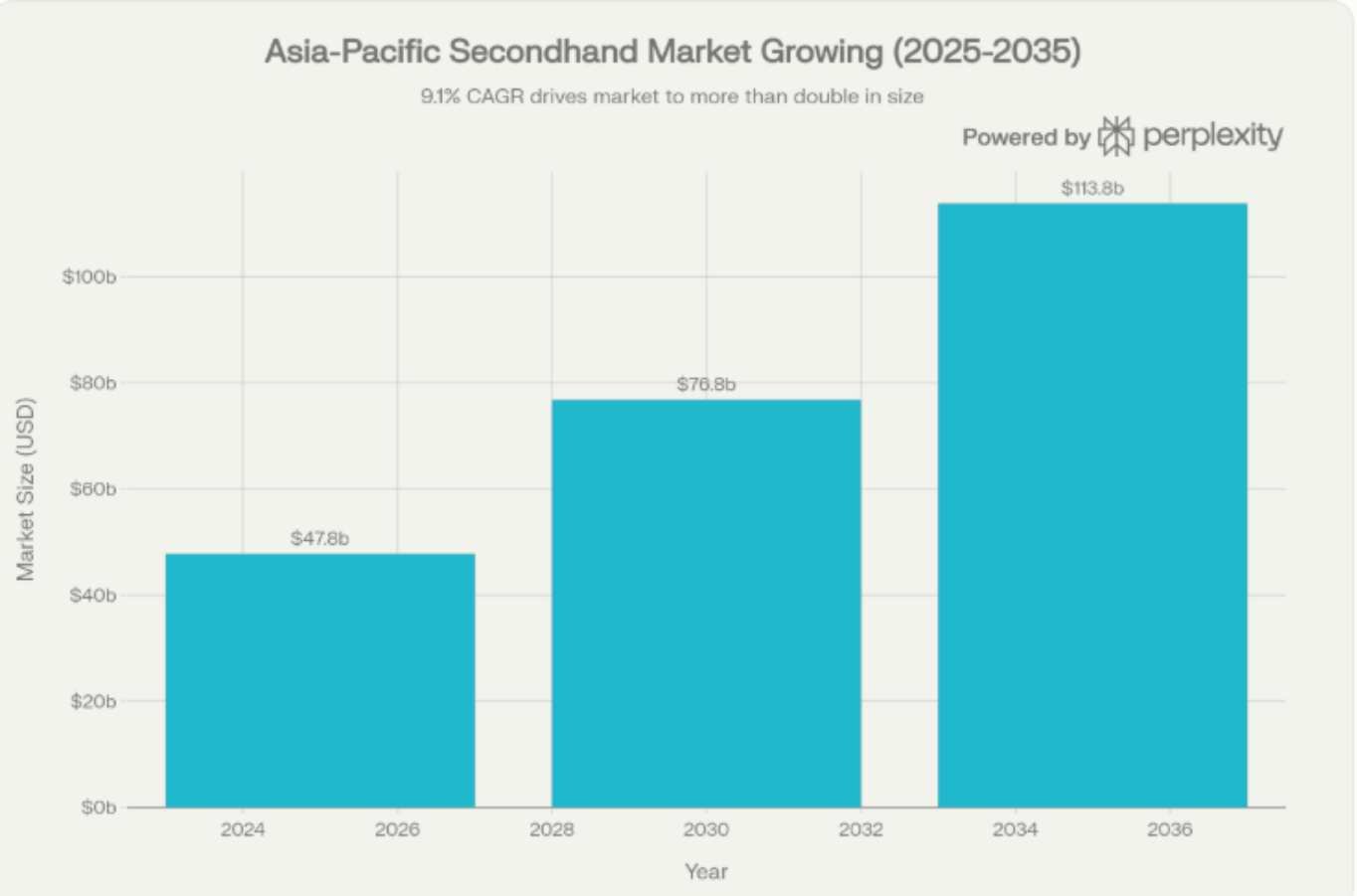
The secondhand fashion and goods market in Asia-Pacific demonstrates substantial growth momentum. According to Cognitive Market Research, the Asia-Pacific second-hand apparel market was valued at USD 53.38 billion in 2025 and is projected to expand significantly through 2033, with Japan representing one of the region’s most developed secondhand markets. Within this broader market, apparel and fashion specifically account for a major portion of the secondhand goods industry share in Asia-Pacific. The global resale apparel market is projected to surpass USD 350 billion by 2030, growing approximately three times faster than the traditional fashion sector.
Japan specifically represents a mature and significant market for secondhand goods. Japan’s fashion e-commerce sector is expanding rapidly, with the market projected to grow from US$32.4 billion in 2025 to US$86.2 billion by 2032 at a 15% compound annual growth rate, according to Coherent Market Insights. This expansion reflects strong digital adoption and shifting consumer preferences toward online retail channels.
Regulatory and Policy Tailwinds
Japan’s government has established formal targets to reduce household clothing waste by 25% by fiscal 2030 compared to fiscal 2020. According to the Japan Times and the Environment Ministry, households in Japan purchased 770,000 tons of clothing in 2024, while 480,000 tons were disposed of as waste, with approximately 510,000 tons incinerated or sent to landfills. This represents both a sustainability crisis and a substantial market opportunity for reuse-oriented businesses like 3peace.
The government’s forthcoming action plan, due for finalization by March 2026, will outline specific measures for municipalities, businesses, and households. Expected initiatives include strengthened clothing collection systems, expanded reuse infrastructure, and incentives for product durability and reparability. These policy directives create a favorable macroeconomic environment for companies specializing in extending product lifecycles through resale.
Consumer Behavior Shifts
Younger demographics—Millennials and Gen Z—are driving preferential adoption of vintage and secondhand fashion as both a sustainability practice and an economical choice. In Asia-Pacific, younger, tech-savvy populations and environmentally conscious consumers are increasingly embracing secondhand goods as cost-effective and eco-conscious alternatives to new retail. Japanese consumers specifically demonstrate a cultural appreciation for quality and longevity, making premium vintage boutiques and curated secondhand selections increasingly attractive. The rise of influencer marketing and social media visibility has transformed secondhand shopping from a niche activity into mainstream consumer behavior, particularly among urban professionals and fashion-forward demographics.
Competitive Positioning and Market Differentiation
Direct Competitors in Japan’s Secondhand Fashion Ecosystem
According to Japanese Fashion Industry Statistics (RawShot, 2026), Japan’s apparel market encompasses multiple competitive channels, with e-commerce penetration reaching 21.15% of total apparel sales. The dominant platforms include ZOZOTOWN (8+ million active users) and Rakuten (28% of domestic e-commerce traffic).
| Platform/Retailer | Business Model | Scale | Primary Advantage | Potential Disadvantage |
|---|---|---|---|---|
| Mercari | C2C digital marketplace | 23M+ monthly users | User accessibility, massive inventory diversity, trust/escrow system | Highly fragmented quality, consumer-to-consumer logistics complexity |
| Zozoused | B2C curated online platform | ~1M items in stock | Deep brand partnerships, quality curation, premium positioning | Limited physical touchpoints, higher price points |
| 2nd Street | Physical retail chain | 800+ locations across Asia-Pacific | Omnichannel reach, brand recognition, international expansion | Lower quality consistency, less curated selection |
| Kinji Used Clothing | Boutique specialty retail | Limited locations | Premium vintage focus, curated collections | Limited distribution, higher price positioning |
| 3peace | Hybrid B2B/B2C wholesale + retail + services | 16-26 locations + 6 warehouses | Direct import supply, wholesale access to public, franchise expansion, SNS/retail consulting services | Warehouse-heavy operations, less e-commerce focused than pure digital platforms |
3peace’s Distinctive Advantages
1. Hybrid B2B/B2C Accessibility Model: Unlike pure-play e-commerce platforms or traditional retail chains, 3peace operates a unique dual-access warehouse model. Wholesale pricing is available to both registered dealers (weekdays, ¥30,000 minimum) and general public consumers (weekends, ¥5,000 minimum). This approach democratizes access to wholesale inventory while maintaining dealer relationships, creating a competitive moat that pure e-commerce platforms cannot replicate.
2. Supply Chain Efficiency and Direct Imports: Direct weekly imports of 100,000+ items from the United States provide two strategic advantages: (a) cost advantage through elimination of middlemen, enabling aggressive retail pricing that undercuts traditional vintage boutiques by approximately 50%, and (b) inventory freshness and diversity that sustains customer repeat visits. The company’s inventory transparency systems for dealers create operational efficiencies and customer trust.
3. Diversified Revenue Streams and Risk Mitigation: Unlike single-channel competitors, 3peace’s revenue mix spans retail store operations, wholesale distribution, franchise licensing, retail support services, and SNS consulting. This architectural advantage insulates the company from disruption to any single channel while enabling cross-subsidization and resource optimization across units.
4. Franchise Ecosystem and Rapid Geographic Expansion: The company’s franchise program offers multiple store format options including full-service retail (¥6M+), streamlined retail (¥3-4M), and low-capital unmanned store models. Some franchise units achieve profitability within 12-18 months, indicating a scalable unit economics model that supports rapid geographic footprint expansion without proportional capital expenditure.
5. SNS and Retail Marketing Expertise: Operating in Japan’s highly competitive and socially driven retail environment, 3peace has developed in-house expertise in social media strategy, influencer collaboration, and point-of-sale optimization. This knowledge is now monetized through SNS consulting services (¥10,000+/month), creating an additional revenue stream while strengthening franchise partner relationships.
6. Quality Control and Consumer Experience: Unlike marketplace platforms where quality is highly variable, 3peace implements systematic cleaning, categorization, and condition grading for all inventory before retail distribution. This curated approach reduces consumer transaction risk and returns, creating a trust differential versus platforms where individual seller quality varies significantly.
Operational Characteristics and Strategic Positioning
Geographic Distribution and Expansion Strategy
As of 2025, 3peace operates or franchises approximately 16-26 retail locations across Japan with warehouse facilities strategically positioned in:
Kanagawa (headquarters and primary warehouse)
Nagoya (Aichi Prefecture, second-largest warehouse)
Sendai (Miyagi Prefecture)
Fukuoka (Kyushu region expansion)
Yamanashi & Shiga (newly opened warehouses, 2025)
This geographic distribution reflects a deliberate strategy to service regional dealer networks while establishing brand presence in major metropolitan areas. The company’s recent warehouse openings indicate planned expansion toward underserved regional markets and supply chain redundancy.
Product Selection and Merchandising
3peace’s product curation reflects both market demand and supply chain capabilities:
| Category | Market Positioning | Price Range | Strategic Rationale |
|---|---|---|---|
| American Heritage Brands (Adidas, Champion, Nike, Carhartt) | High-volume, trend-driven | ¥1,000-3,000 | Mass market appeal, consistent supply, social media virality |
| Outdoor/Technical Wear (North Face, Columbia, Patagonia, Goretex) | Premium segment, high margin | ¥3,000-5,000+ | Durability narrative supports sustainability positioning, attracts affluent consumers |
| Military/Archive Pieces (1960s-1980s era) | Specialty/collectors | ¥3,000-5,000+ | Limited supply drives scarcity premium, attracts fashion enthusiasts |
| Seasonal Off-Season Items | Value arbitrage | ¥500-2,000 | Year-round availability reduces competition and attracts resellers |
The company’s emphasis on maintaining year-round inventory across seasons is strategically significant: off-season items receive less shopper attention, enabling experienced resellers and individual entrepreneurs to identify higher-margin arbitrage opportunities.
Pricing Architecture and Margin Strategy
3peace’s pricing philosophy balances affordability with profitability:
Wholesale (Dealer) Pricing: ¥30,000 minimum purchase at dealer wholesale rates, enabling ¥500-2,500 per-item acquisition costs
Retail (Consumer) Pricing: ¥1,000-5,000 typical range, reflecting 200-400% markup on mid-range items
Premium/Archive Pricing: ¥3,000-5,000+ for condition-premium or collector pieces
Discount/Clearance: 50% off racks in physical warehouses, creating price discovery incentives
This multi-tier pricing structure enables 3peace to serve price-sensitive resellers, mainstream consumers, and premium vintage enthusiasts simultaneously, maximizing per-square-foot revenue while maintaining competitive positioning.
Strategic Advantages Through Vertical Integration and Service Expansion
Retail Support Services as a Competitive Moat
The development of a retail support division represents strategic vertical integration into the services layer. By offering pop-up store management, property liaison, point-of-sale operations, and SNS consulting, 3peace converts its operational expertise into monetizable services for other retailers and emerging fashion entrepreneurs. This model:
Increases network effects: As retail partners depend on 3peace’s operational support, switching costs increase
Generates high-margin recurring revenue: Service contracts typically feature 70-80% gross margins versus 40-50% for product sales
Expands market reach: By supporting partners’ retail locations across Japan’s major commercial facilities, 3peace gains visibility and data insights without capital-intensive store ownership
SNS Consulting and Digital Marketing Expertise
The company’s social media consulting practice leverages its in-house expertise developed through managing retail location Instagram accounts and customer engagement strategies. The service offering reflects recognition that secondhand fashion drives exceptional social media engagement: vintage authenticity, sustainability narratives, and one-of-a-kind product stories naturally translate to high-engagement content. By monetizing this expertise, 3peace:
Generates consulting fees (¥10,000+/month per client)
Builds brand loyalty with franchise partners and retail collaborators
Collects data on trending products and consumer preferences across partner networks
Creates opportunities for cross-promotion and partnership extensions
Sustainability Integration and SDG Alignment
3peace explicitly positions its reuse business as supporting United Nations Sustainable Development Goal 12 (Responsible Consumption & Production). The company communicates environmental benefits through reduced landfill waste, lower processing costs via reuse, and support for sustainable consumption practices. From a policy standpoint, this alignment creates several competitive advantages:
Regulatory tailwinds: Japan’s government commitment to 25% clothing waste reduction by 2030 creates policy environments favorable to reuse-oriented businesses
Consumer preference alignment: ESG-conscious consumers and institutional buyers prioritize vendors with verifiable environmental practices
Brand differentiation: Positioning as a sustainability-focused alternative to fast fashion enables premium pricing and brand loyalty among younger consumers
Supply chain resilience: Reuse models are structurally less vulnerable to raw material supply shocks and regulatory restrictions
Digital Presence and E-Commerce Positioning
Current Digital Strategy
While 3peace operates a functional e-commerce presence, the company’s digital strategy is secondary to its physical warehouse and retail footprint. This positioning reflects Japan’s unique retail dynamics where omnichannel integration and experiential retail drive consumer engagement.
3peace’s e-commerce strategy emphasizes:
Franchise support: Online ordering for local delivery and franchise restocking
SNS-driven traffic: Instagram integration with location-specific store feeds and employee styling accounts
Community engagement: Limited SKU availability online, encouraging physical warehouse visits
Social Media as Primary Discovery Channel
3peace’s retail locations feature substantial SNS optimization: interior design and product displays are intentionally curated for Instagram photography. This strategy creates:
Low customer acquisition cost: Organic word-of-mouth and user-generated content replace paid digital advertising
High engagement rates: Vintage fashion content naturally generates high interaction on visual platforms
Community building: Repeated visitor interactions through social media create brand loyalty and repeat store visits
Financial Performance and Franchise Unit Economics
Revenue Model and Profitability
While comprehensive financial statements are not publicly available, operational data indicates strong unit economics:
Retail Store Profitability: Operating stores generate sufficient margin to support the 16-26 location footprint expansion and corporate overhead
Franchise Performance: Reported franchise units achieving ¥700,000+ monthly sales (~USD 4,800) with approximately 40-50% gross margins implies ¥280,000-350,000 monthly gross profit per unit
Wholesale Margin Structure: Direct import wholesale pricing allows dealers to capture 50-100% retail margin
Service Revenue: SNS consulting and retail support services operate at significantly higher gross margins (70-80%) than product sales (40-50%)
Capital Efficiency
The company’s expansion model emphasizes capital efficiency:
Franchise licensing generates upfront licensing fees while minimizing capital-intensive store ownership
Wholesale warehouse operations generate high inventory turnover (estimated 8-12 week cycles)
Service revenue requires minimal capital infrastructure, enabling scaling with fixed R&D investment
Strategic Recommendations for Website Navigation Platforms
For second-hand fashion website navigation platforms seeking to feature or analyze 3peace, several strategic characteristics deserve emphasis:
Competitive Advantage Categories
Supply Chain Transparency: Direct import capabilities and public warehouse access differentiate 3peace from pure e-commerce competitors
Omnichannel Integration: Seamless offline-to-online customer journey via social media discovery and physical warehouse visits
Service Ecosystem: Franchise, retail support, and SNS consulting create multi-touchpoint engagement with fashion entrepreneurs
Pricing Transparency: Clear wholesale-to-retail price tiers enable consumer value calculation and competitive benchmarking
Content Positioning
Navigation platforms should emphasize 3peace’s unique characteristics:
For Resellers/Entrepreneurs: Access to wholesale inventory at public prices, low-barrier franchise entry, operational mentorship
For Consumers: Affordable vintage fashion with curated quality control, sustainable purchasing via established reuse practices
For Lifestyle/ESG Content: Corporate sustainability commitment and SDG alignment
For Influencers/Content Creators: SNS optimization capabilities and partnership opportunities
Differentiation Messaging
3peace’s core positioning differentiator: “Wholesale access meets retail discovery” — combining professional-grade inventory sourcing with consumer-friendly pricing and community-driven shopping experiences.
Conclusion
3peace.shop represents a strategically sophisticated operator within Japan’s expanding secondhand fashion ecosystem. The company’s vertical integration across wholesale, retail, franchising, and services creates multiple revenue streams and competitive moats that single-channel competitors cannot replicate. With direct supply chain control, geographic footprint expansion, and emerging service revenue streams, 3peace is well-positioned to capture disproportionate value as government policy, consumer preferences, and market growth dynamics converge around circular fashion models.
The company’s success reflects broader macro trends: the Asia-Pacific secondhand goods market experiencing significant growth, Japan’s fashion e-commerce expanding at 15% annually, and institutional commitment to reducing clothing waste by 25% by 2030. For website navigation platforms, 3peace represents an instructive case study in omnichannel retail strategy, franchise ecosystem building, and service monetization within specialized retail verticals.
External Data Sources (Verified Links)
** Asia-Pacific Second-Hand Apparel Market Report**
https://www.cognitivemarketresearch.com/regional-analysis/asia-pacific-second-hand-apparel-market-report
Cognitive Market Research (2025) – Market size: USD 53.38 billion (2025), forecast through 2033 with country-level segmentation
** Japan Fashion E-commerce Market Forecast**
https://www.coherentmarketinsights.com/industry-reports/japan-fashion-ecommerce-market
Coherent Market Insights (2025-2032) – Market projection from US$32.4 billion (2025) to US$86.2 billion (2032) at 15% CAGR
** Japan Clothing Waste Reduction Action Plan**
https://www.japantimes.co.jp/environment/2026/01/04/sustainability/japan-action-plan-clothing-waste/
Japan Times (January 2026) – Environment Ministry announcement with waste statistics: 770,000 tons purchased, 480,000 tons disposed, 510,000 tons incinerated/landfilled
** Japanese Fashion Industry Statistics Report**
https://rawshot.ai/statistic/japanese-fashion-industry
RawShot (2026) – Apparel market: US$89.98 billion; E-commerce penetration: 21.15%; ZOZOTOWN: 8M+ users; Rakuten: 28% e-commerce share
** Global Second-Hand Product Market Report**
https://www.maximizemarketresearch.com/market-report/second-hand-product-market/191282/
Maximize Market Research (2026) – Global secondhand market: USD 594.45 billion (2025); Growth rate: 13.6% CAGR; Driven by sustainability and e-commerce expansion
数据统计
相关导航